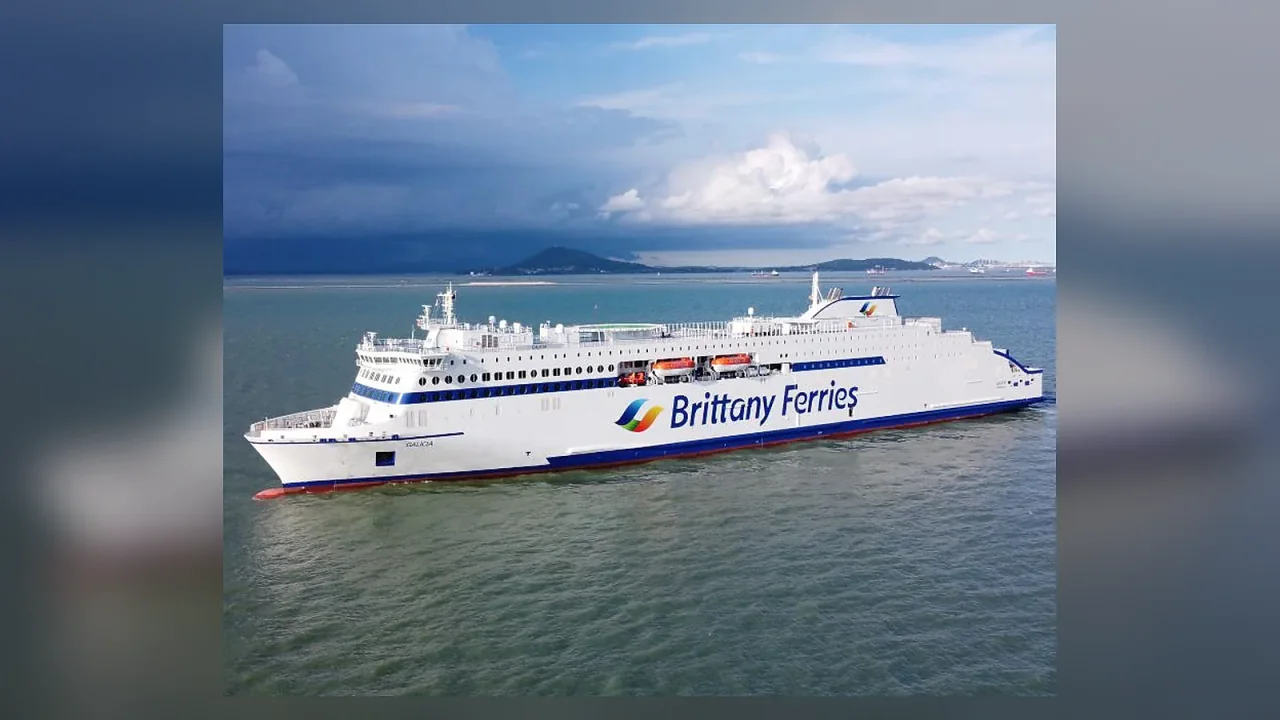
Western Channel specialist since 1972
From Breton farming roots to a major UK–France–Spain network
Brittany Ferries grew from an unusually practical idea. Breton farmers wanted a direct sea link to
Britain for agricultural exports, so Alexis Gourvennec and fellow farming cooperatives created the
company in 1972. The first service began from Roscoff to Plymouth in January 1973. More than five
decades later, the same Atlantic geography still defines the business: Brittany Ferries links
southern England and Ireland with western France and northern Spain, while keeping strong commercial
and cultural ties with the regions at both ends of each route.
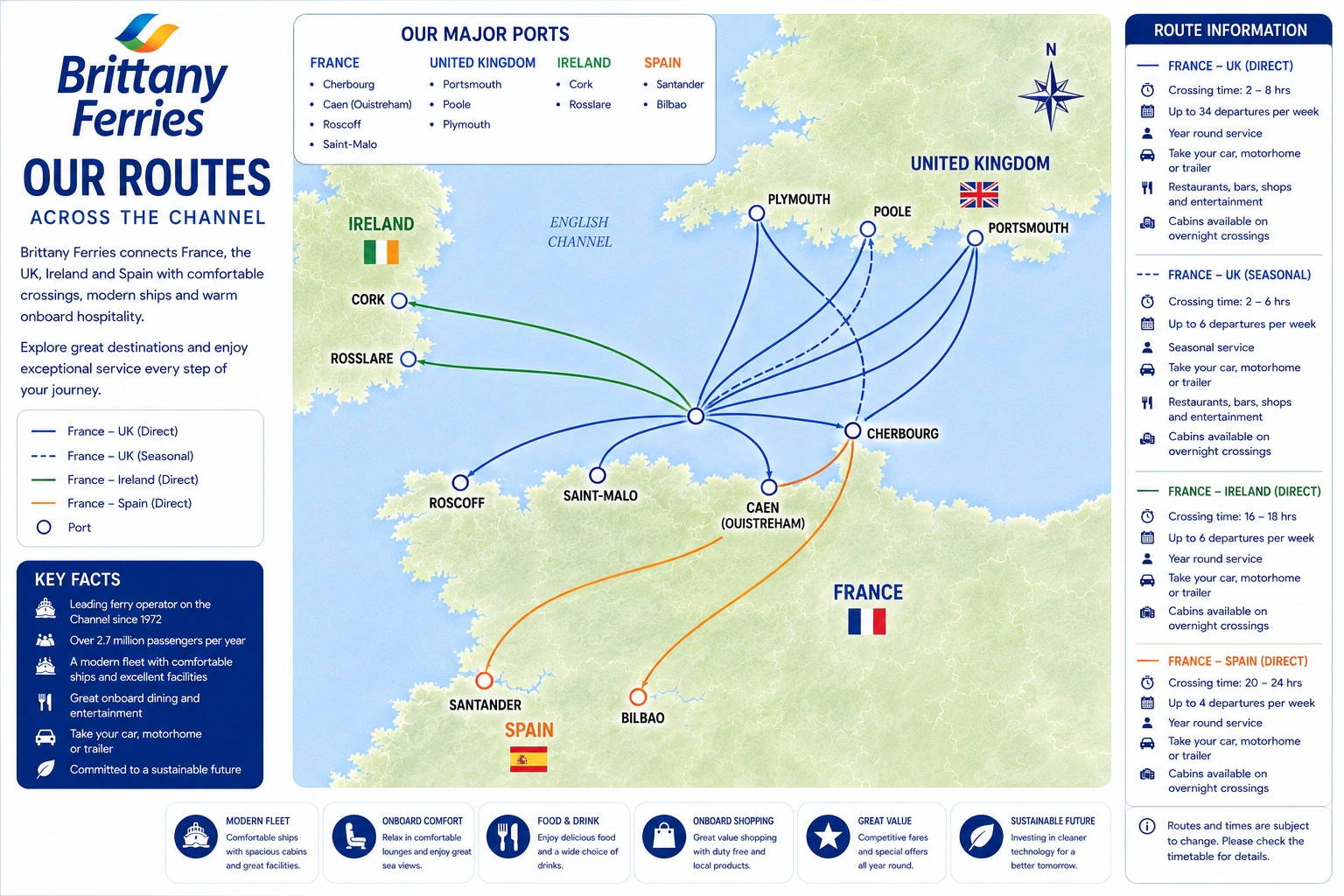
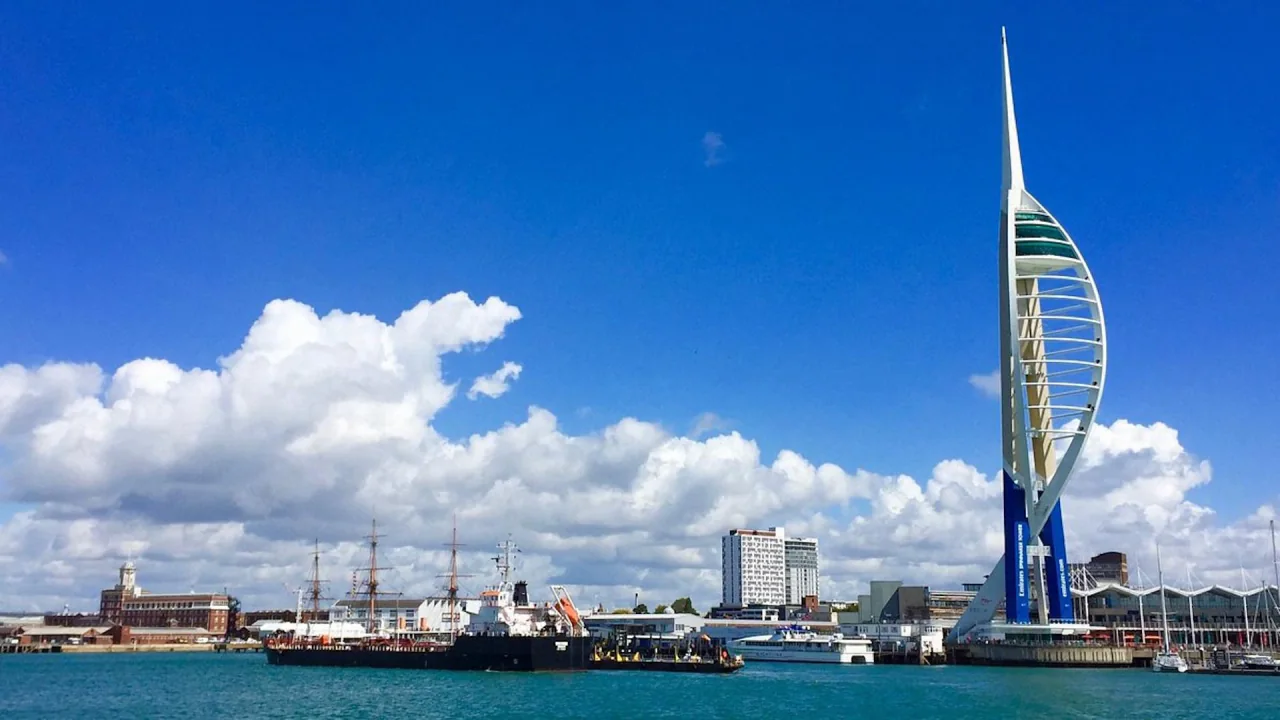
For UK travellers, the network is built around three south-coast ports. Portsmouth offers the
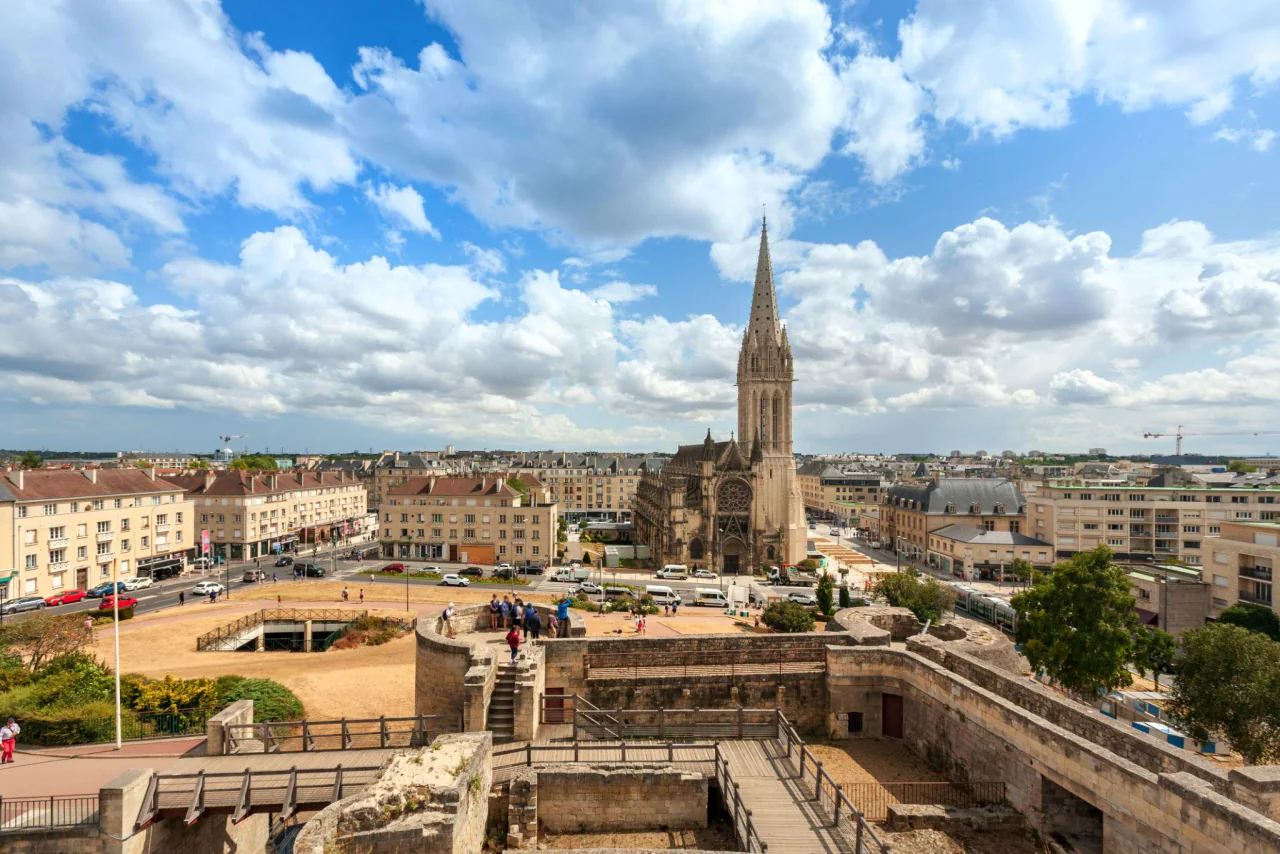
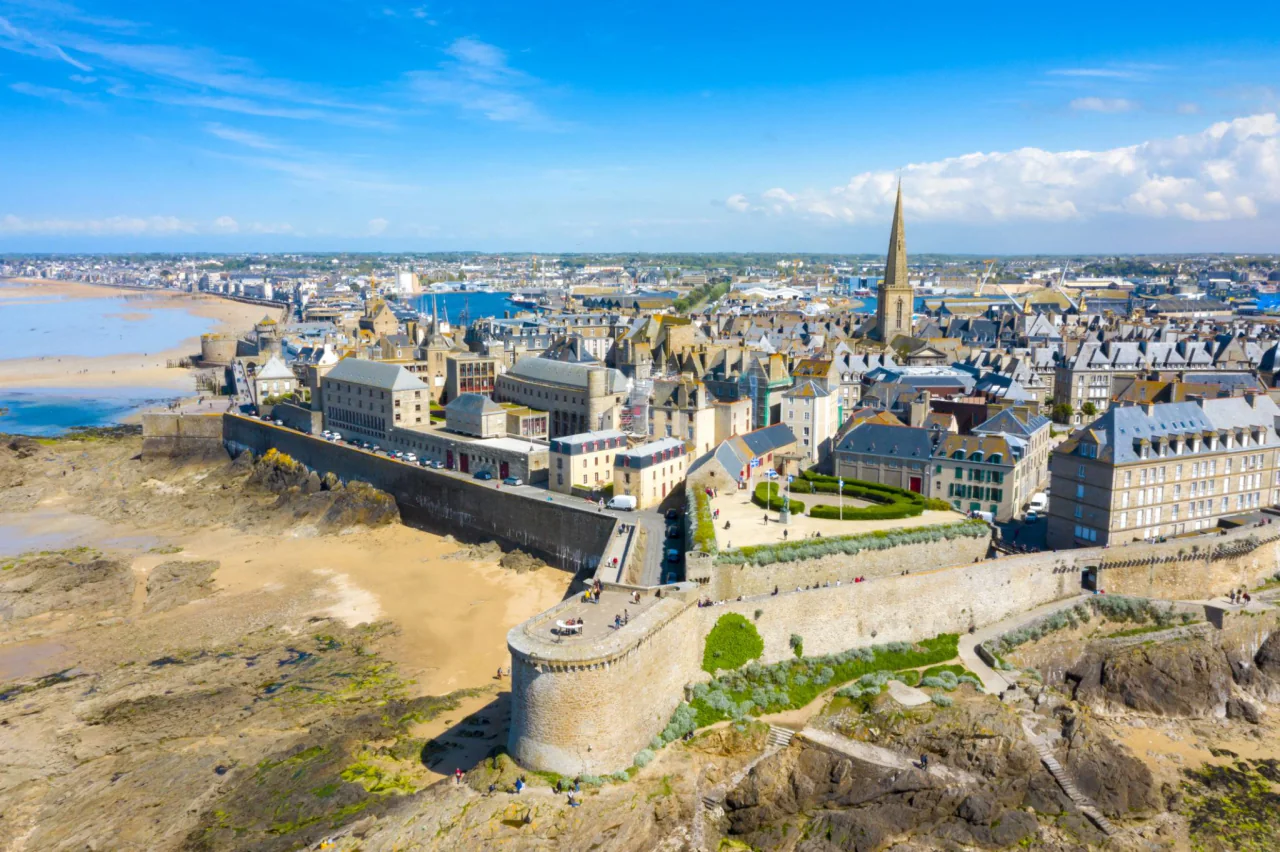
broadest choice, with routes to Caen, Cherbourg, St Malo and Le Havre in France plus Santander and
Bilbao in Spain. Plymouth gives western Britain a direct route to Roscoff and the shortest Brittany
Ferries sea journey to Spain, while Poole serves Cherbourg and also participates in the seasonal
high-speed service via Guernsey to St Malo.
The Ireland network adds a different set of long-distance choices. Cork connects directly with
Roscoff, while Rosslare links with Cherbourg and Bilbao. For winter 2026/27 Brittany Ferries has
also published selected Rosslare–Santander departures. These sailings allow motorists to bypass long
drives through Britain or France and arrive much closer to the Atlantic regions of France and Spain.
Brittany Ferries is particularly well suited to travellers who see the vehicle as part of the
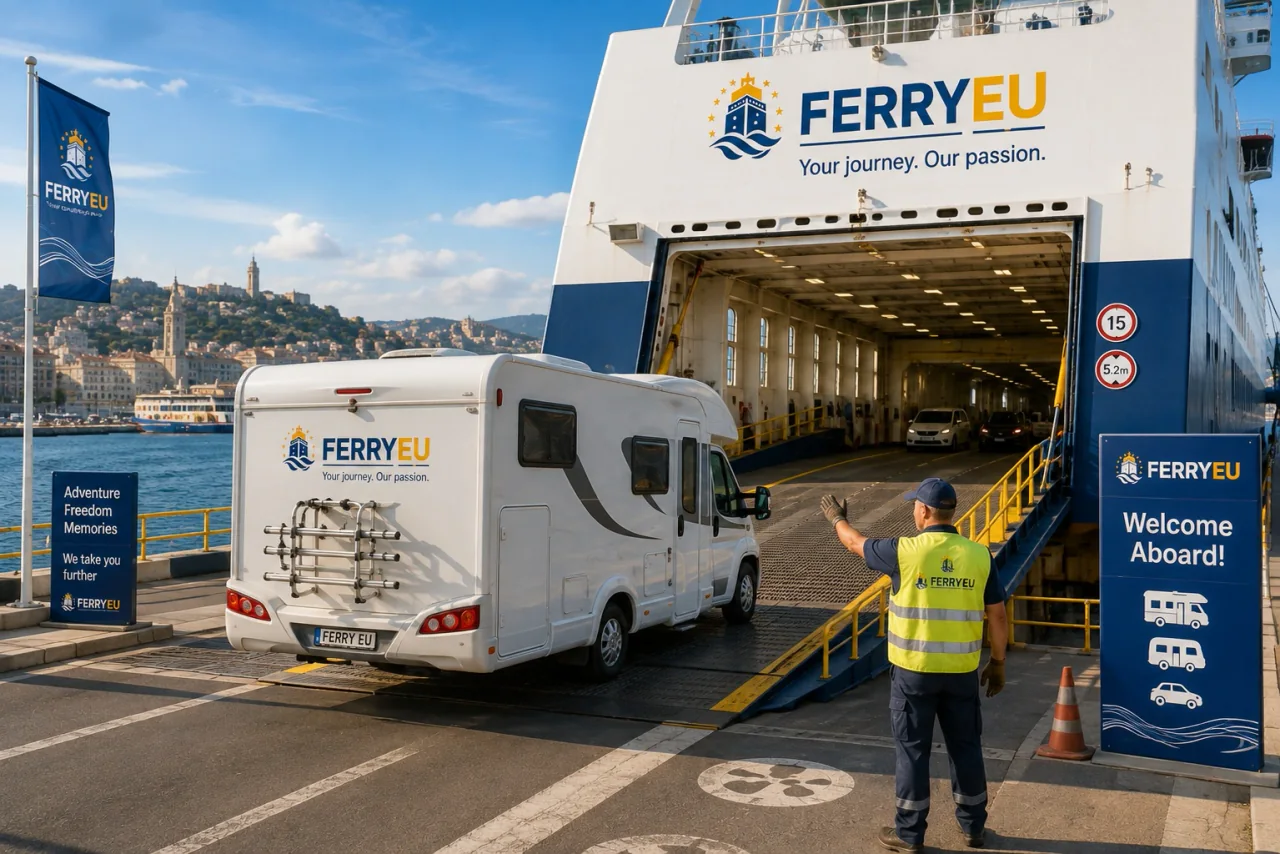
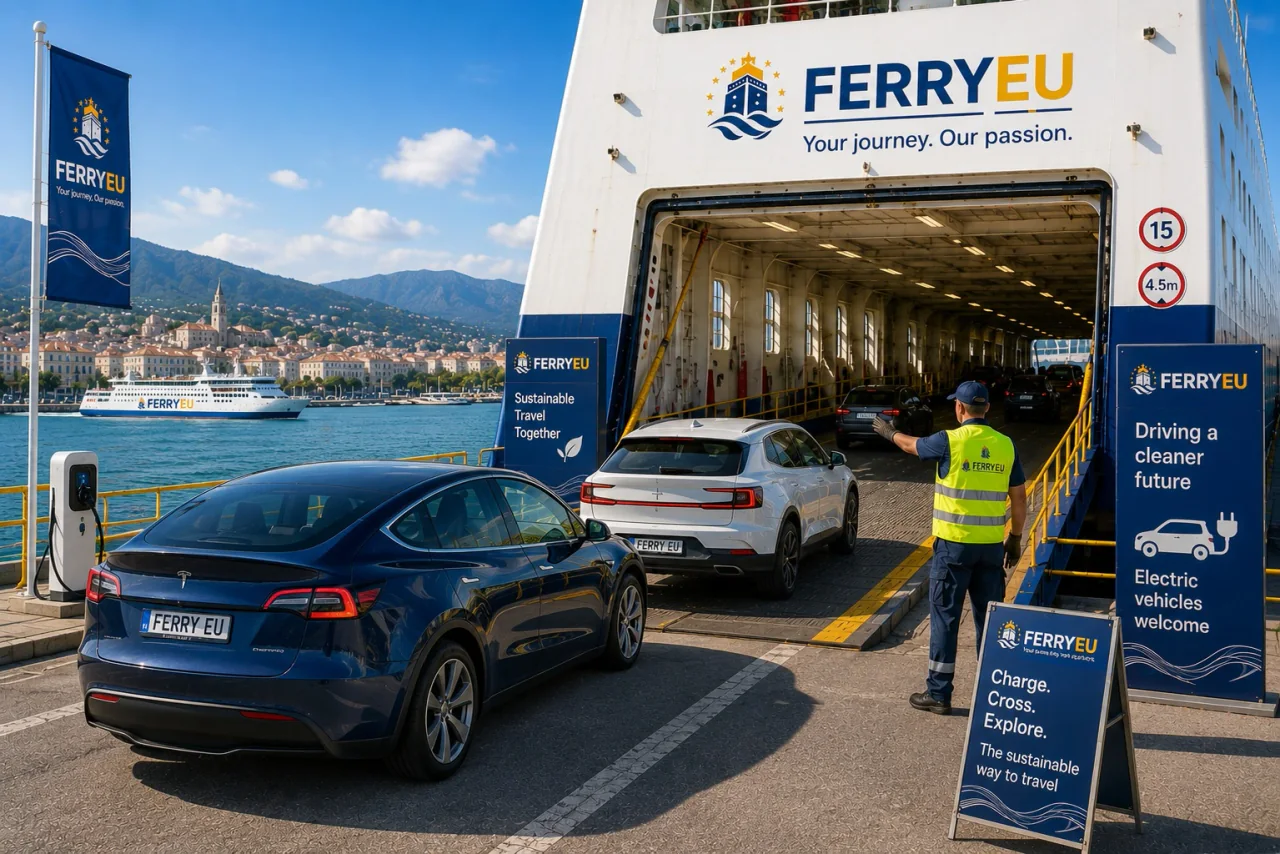
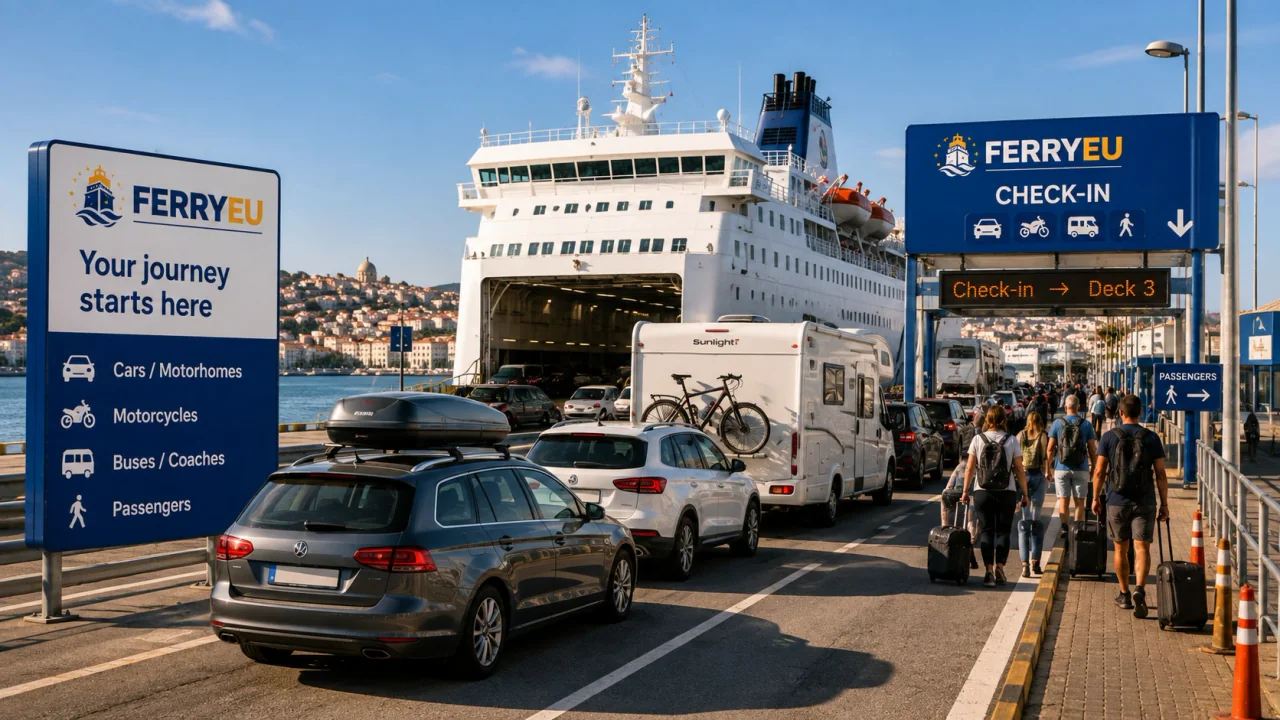
holiday. Cars, motorcycles, caravans and motorhomes can cross with their occupants, luggage stays
with the vehicle, and the longer crossings can replace a night of driving or accommodation with a
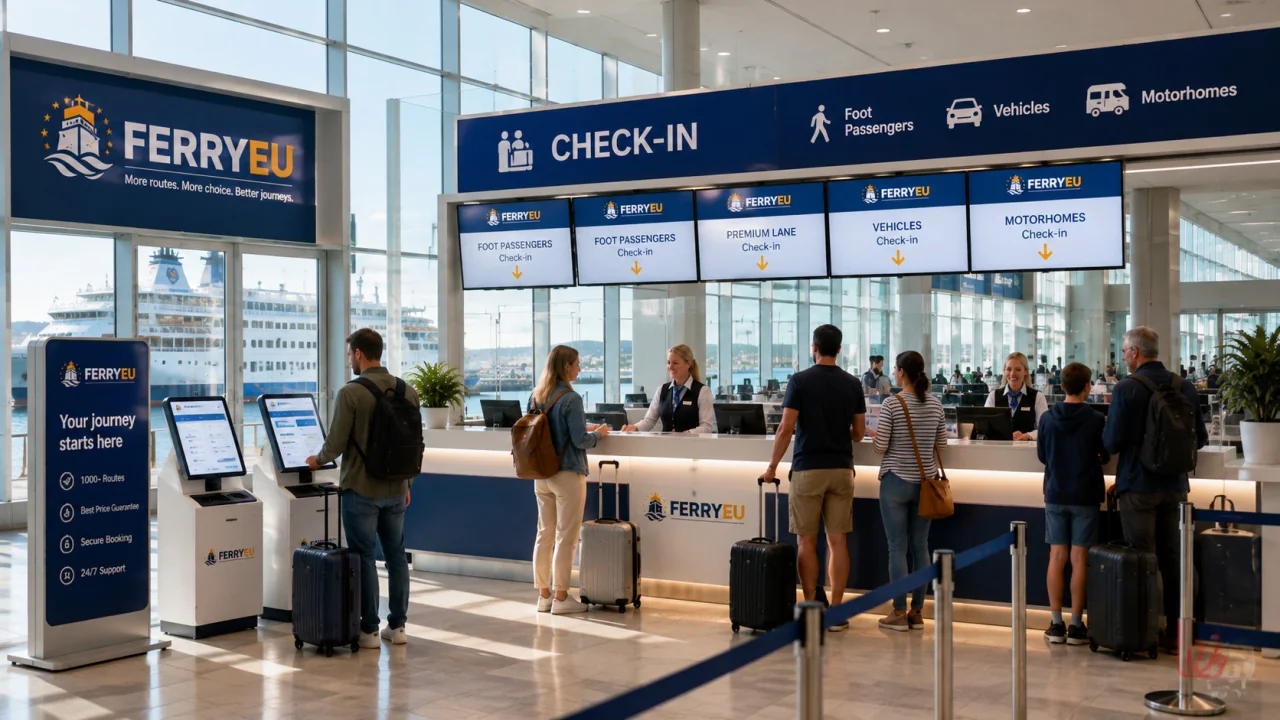
cabin at sea. Foot passengers are also carried on many routes, but availability and port access
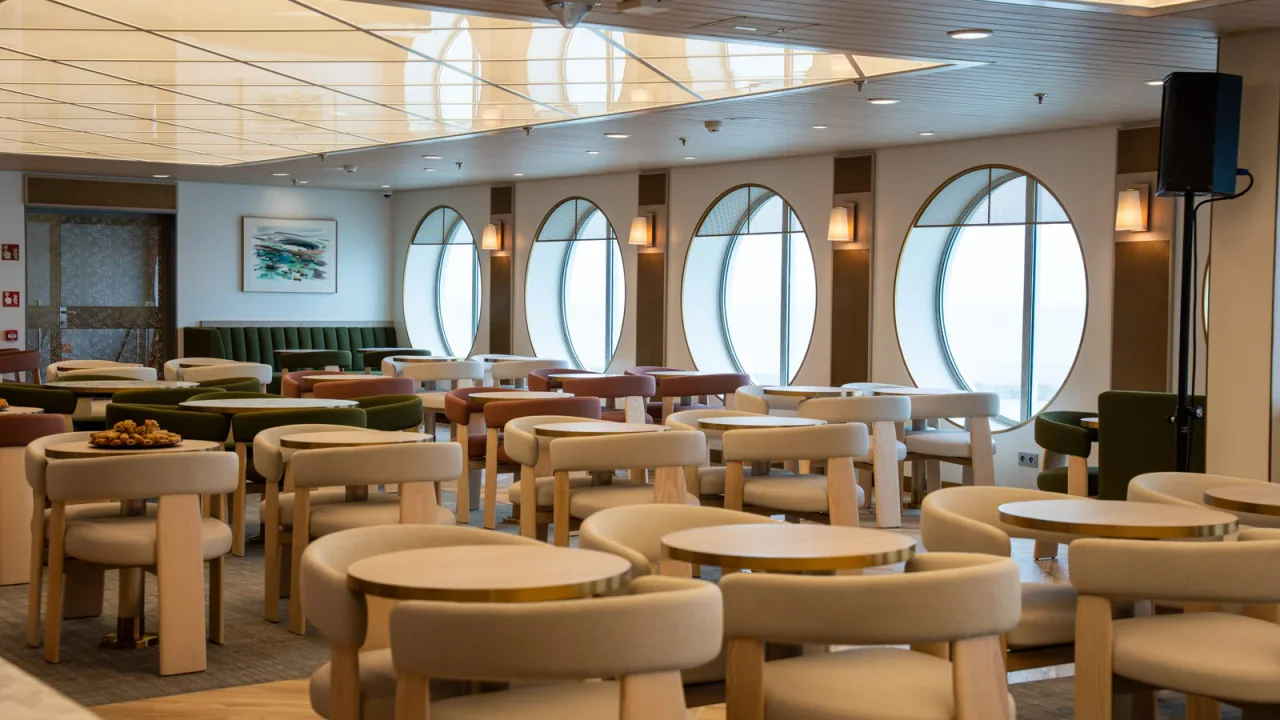
should always be checked for the chosen sailing. The onboard product varies substantially. A
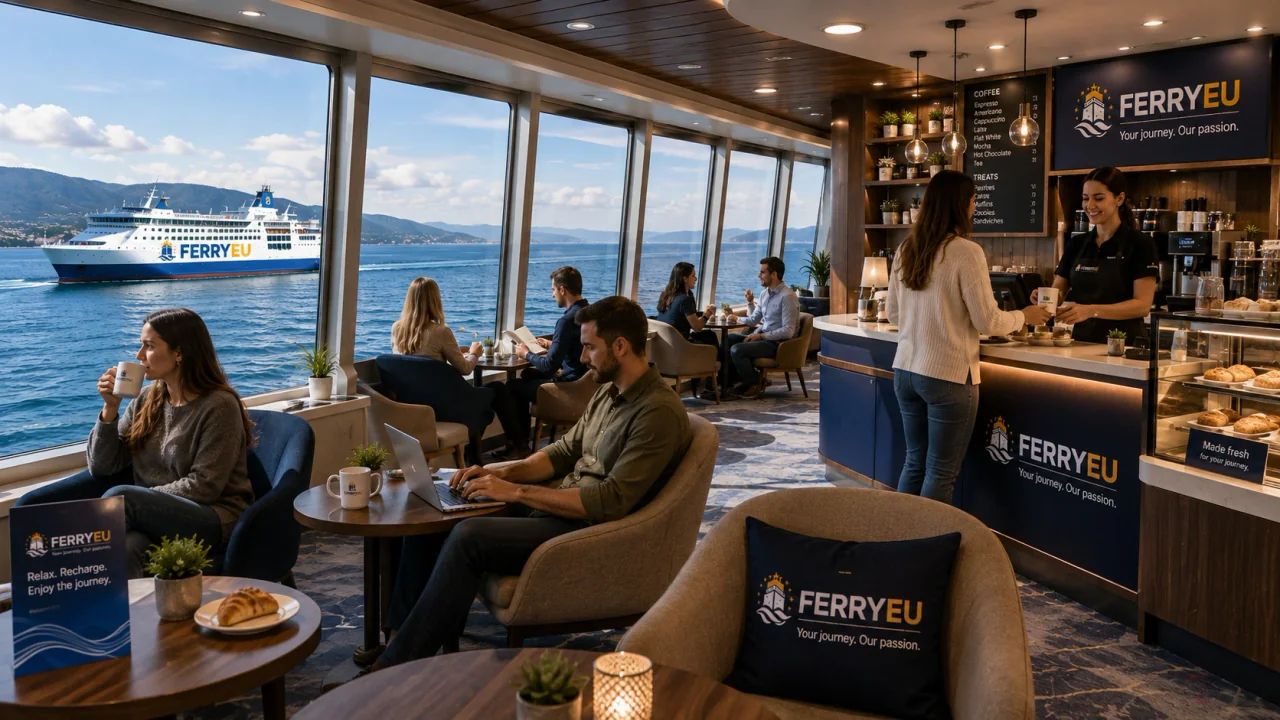
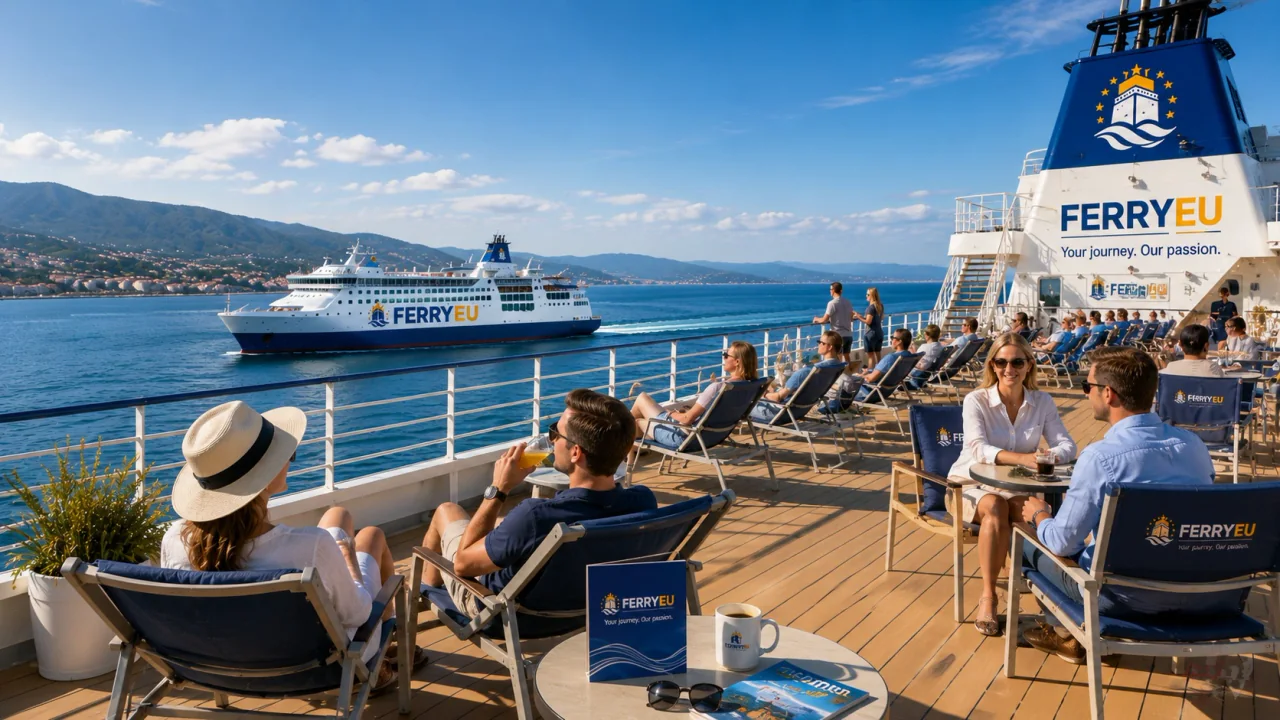
six-hour Channel crossing might be about a meal, a lounge and a comfortable seat; a 20-to-36-hour
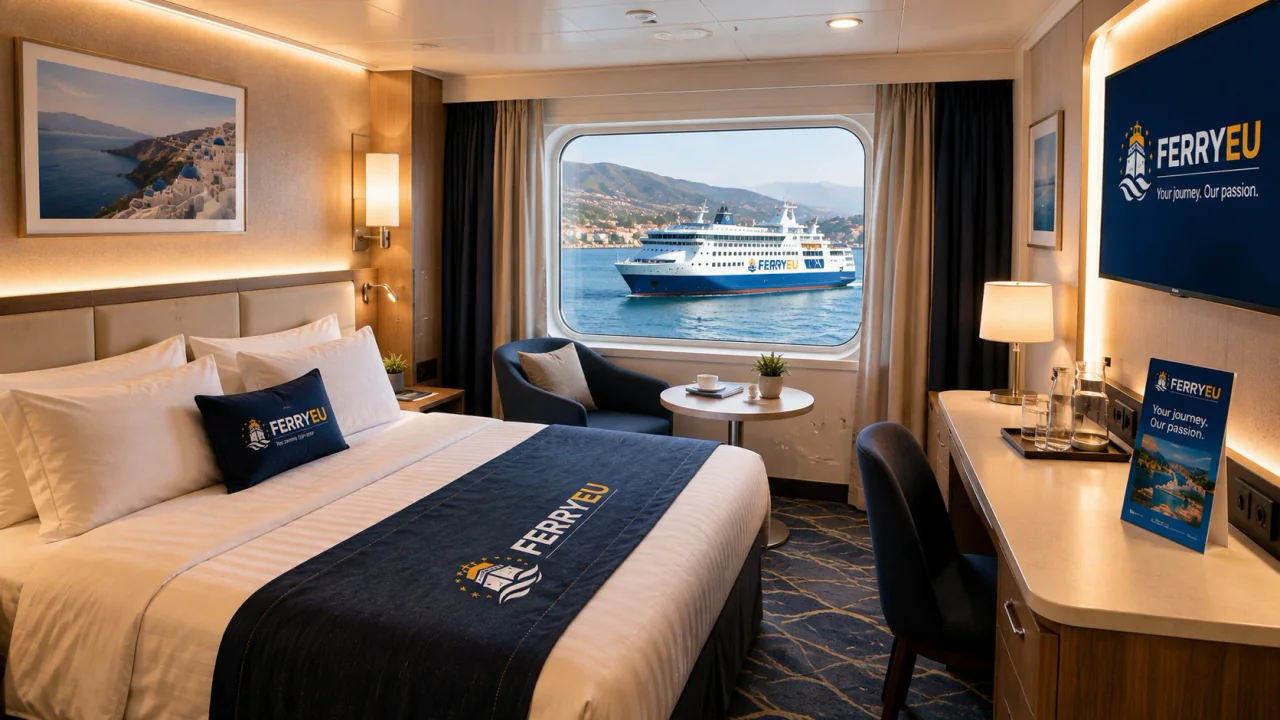
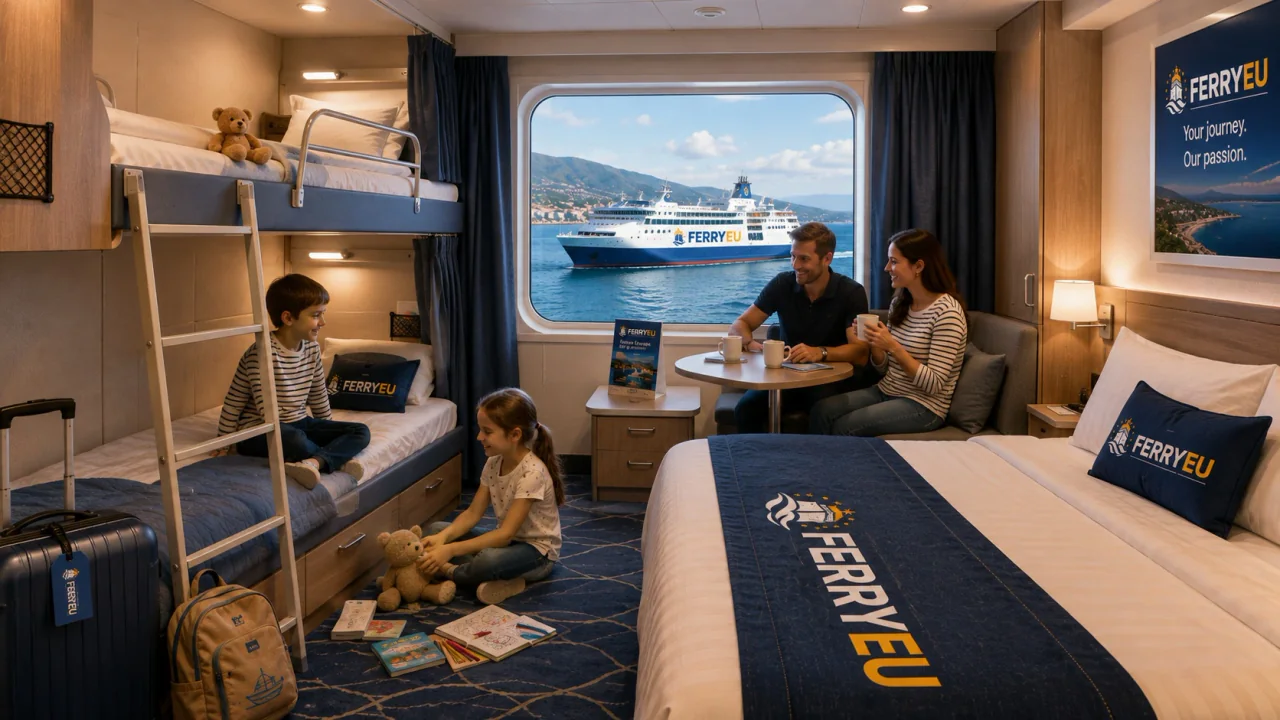
Spain sailing is closer to a short cruise, with private cabins, restaurants, bars, entertainment and
substantial time to rest. That variety is why comparing the route and ship matters as much as
comparing the headline fare.
Route-planning note: seasonal frequency and vessel assignment change. Use the exact sailing shown at booking as the final authority for ship, check-in time and onboard accommodation.


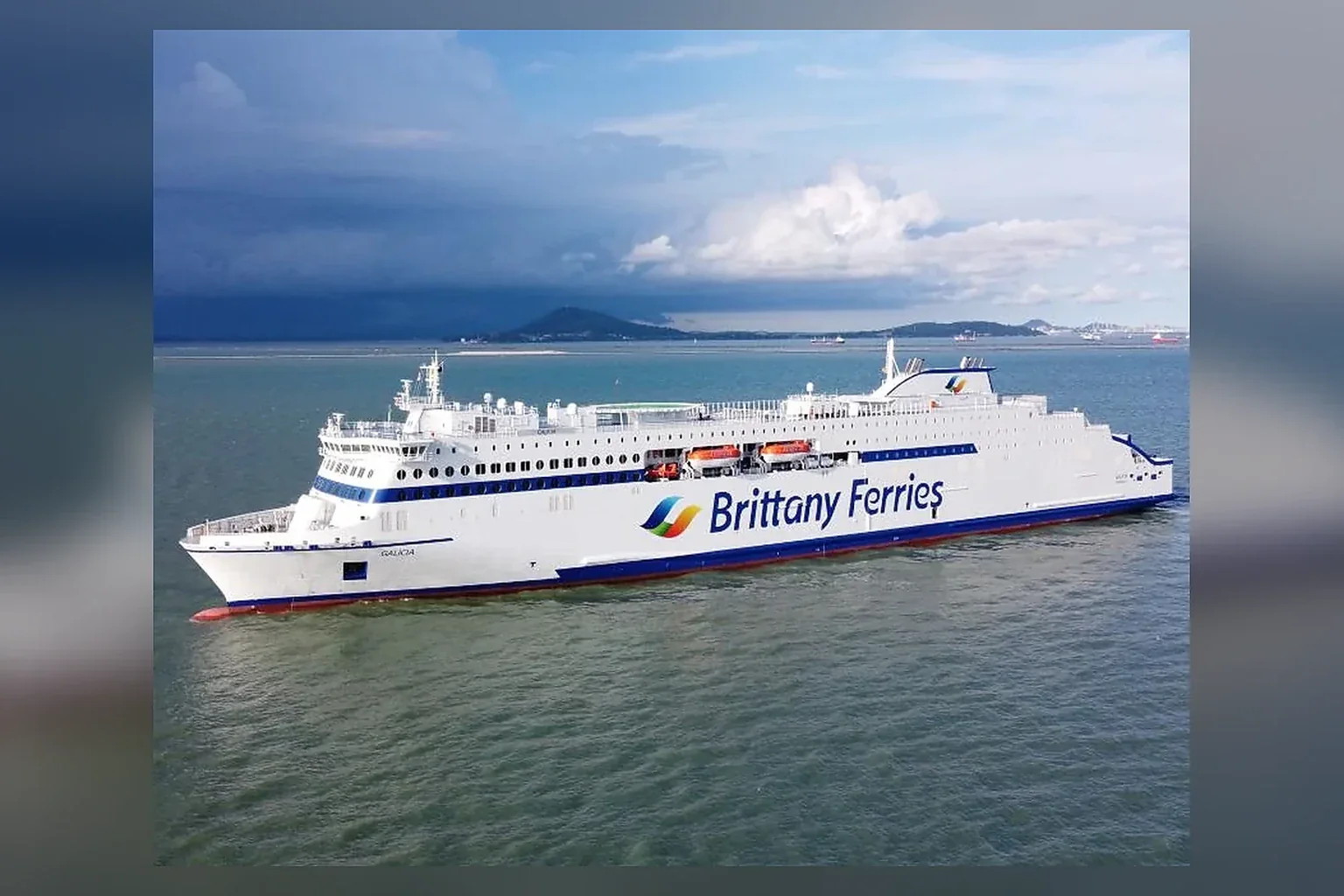
 France, Spain & Ireland
 Cruise ferries + fast craft
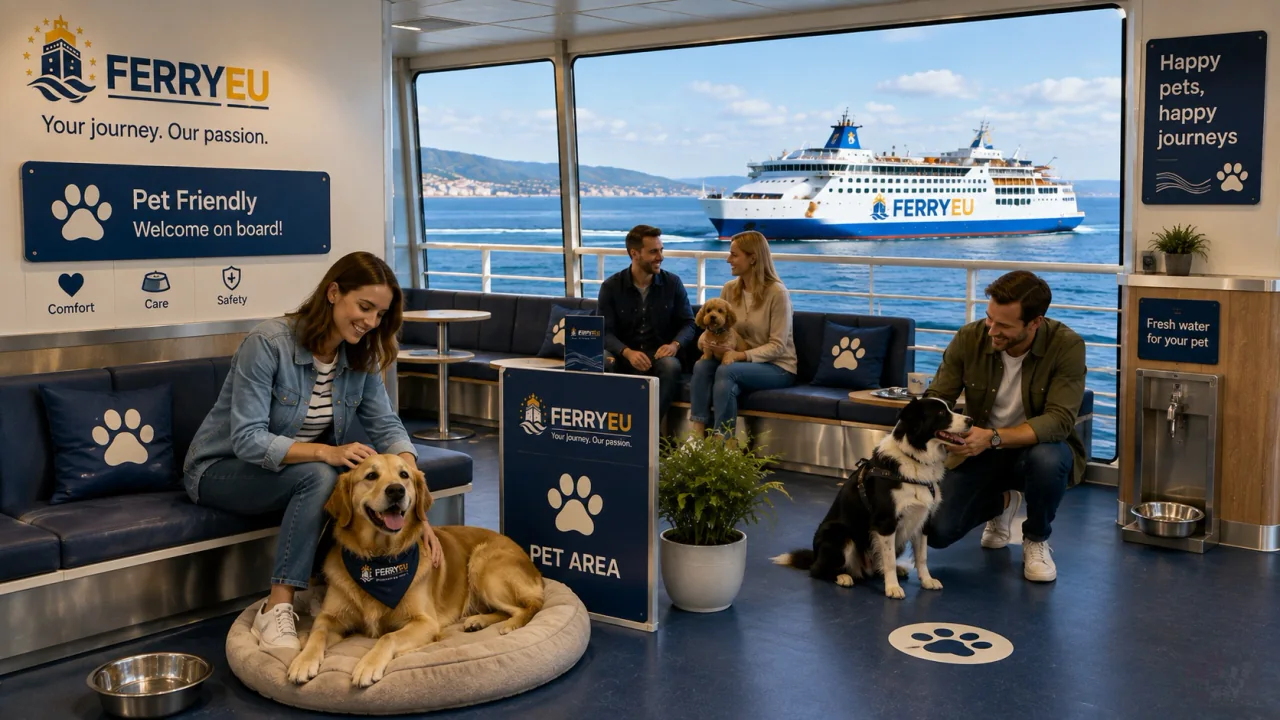
 Cars, motorhomes & pets